
Best Buddies
Adequan® is a very well advertised brand of a substance called polysulfated glycosaminoglycan (this is one of those chemical names that is very illustrative if you’re into chemistry but is essentially linguistically impenetrable if you’re not) or, mercifully, PSGAG, for short. It’s gained a lot of popularity over the years as a
“joint protector” of sorts, that is, as drug that supposedly protects cartilage, and treats joint inflammation.
PSGAG was first introduced to the equine community back in the mid-1980s, to be used for cases where cartilage damage was thought to be present, with the goal of preventing, slowing, or perhaps even reversing cartilage damage. That’s a really laudable goal. I mean, who wouldn’t want to protect a horse’s cartilage? Thus, it wasn’t too long before it was almost routinely given to normal horses, under the rationale that it may help keep normal horses from doing damage to their joints when they are competing – and it’s to owners of competition horses to which the product is heavily advertised (with things like glossy ads and class sponsorships). Like Legend®, or rhinoceros repellant, whether it can actually do all of that is another question.
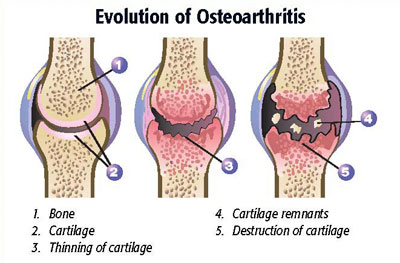
ASIDE: First problem. How are you supposed to know if your horse is going to develop osteoarthritis anyway? You can’t. Nevertheless, the fear of osteoarthritis is certainly motivating, and understandably so.
PSGAG is made up mostly of chondroitin sulfate (CS), which is sometimes fed orally to horses (in a seemingly limitless number of oral supplements), and like CS, the product is made, and then modified, from the lung and tracheal tissue of cows. There are two forms of Adequan®: one is for injection into the joint, and the other is for injection into the muscle. Even though the product has been approved by the US Food and Drug Administration, it’s not at all clear how well – or even whether – the products are effective, especially when injected into the muscle (the most common route of administration).
 It’s not like people haven’t studied the stuff. Early test tube studies on the effects of PSGAG were somewhat contradictory. Some studies conducted in test tubes on cartilage cells showed positive effects on cartilage, while others showed no effects; some even showed effects that could be construed as harmful. The thing about test tube studies is that the results can’t necessarily be carried over to a living animal – putting drugs into test tubes is a lot different than putting drugs into a horse, mostly because the horse’s body does things to the drug that don’t occur in the test tube (it’s called metabolism). Horses don’t live in glass houses – or glass vials, either.
Although there doesn’t seem to be much in the way of recent research – and there seems to be little motivation to do research once a product gets approved – results from the studies that have been done on living horses don’t provide much in the way of support for it, either. So, for example, even though one study conducted in a surgical model of osteoarthritis concluded that Adequan®, given in the joint, reduced joint inflammation and subsequent damage to cartilage caused by chemical injury, the substance absolutely did not help heal damage caused by the surgical procedure. In 2010, there was a study showing that the product reduced inflammation in joints that were inflamed by injection of a chemical, but unless you go about injecting inflammation-inducing chemicals into your horse’s joints, it’s hard to know what that really means. In 2011, conducted at Colorado State University, found that Adequan® had no measurable effects on any of the measures used in an experimental arthritis model. Those two studies are consistent with much earlier work. Under any circumstances – and this is really important, at least in my opinion – there’s no study that has shown that PSGAG helps heal cartilage damage that is already present. All this means that if your horse has an arthritic joint, you shouldn’t expect that by giving it Adequan® you are going to reverse or slow down any of the damage, at least based on the studies that have been done over the past 30 or so years. And when you think about it, 30 years is a lot of time to show that there’s an effect, if there’s going to be one.
 Adequan® given in the muscle seems to be a very popular treatment among some horse owners. It’s pretty easy to understand why, I think. People have the idea that it helps prevent joint problems; owners and trainers don’t want their horses to have joint problems. However, It has two other things going for it, that, I think, help explain its popularity:
1. It’s easy to give (just a shot in the muscle)
2. It’s a lot cheaper than Legend®.
Of course, there is some expense associated with PSGAG, which has led to what-is-to-me some rather curious and arbitrary dosing regimens. Based on a therapeutic rationale that is apparently along the lines of, “Something is better than nothing,” horses are given Adequan® on all sorts of different intervals, such as once a month. To me, this makes very little sense, at least from a biological perspective. The label says that you’re supposed to give the injection every four days. You’d think there’s some rationale for the label directions, so, based on that, I’m not sure how giving it every once in a while is supposed to help anything. It is cheaper to give it monthly, instead of all the darn time, but under that rationale, and given the relative lack of supporting evidence, if saving money were the real issue, one could pretty persuasively argue that it might be best not to use it at all.
On the plus side, PSGAG does appear to be very safe. Then again, a saline injection would be safe, too (although pointless).
Adequan® can be injected directly into the joint; you’re not going to do this, of course, but the product is out there. Given in the joint, and based on such scientific evidence as is available, it seems to have a more reliable anti-inflammatory effect, but not obviously any other kind of effect. When it first came out, the company recommended giving weekly injections for a total of five weeks, but, unfortunately, many horse joints weren’t happy with that recommendation. Problems with acute joint inflammation occurred (joint “flare”), which sort of doused people’s enthusiasm for that route of administration. In addition, when compared to other things that get injected into horse joints, such as corticosteroids and hyaluronan, there’s a slightly greater risk of infection with PSGAG; understandably, people might not be inclined to use a product if there’s a significant risk of harm.
The risk of problems from injections of PSGAG into the joint seem to be reduced of you combine it with an antibiotic. Of course, injecting any substance into a joint is something that should be done by your veterinarian. Still, you kind of have to wonder if it’s worth the fuss, particularly since other substances, such as corticosteroids, are demonstrably as effective as anti-inflammatory agents, more consistently effective in research studies, and a lot cheaper.
Oh, one other thing. There’s also some weak support for using PSGAG injections to treat horses that have injured tendons or ligaments. So, if your horse hurts his tendon, or strains a suspensory ligament, you can always shoot him with some PSGAG. But, it’s certainly not something that is going to be critical for a full recovery.
 What do I think (how did I know you’d ask)? Well, more than anything else, when it comes to Adequan® I think that you’re probably paying for your own peace of mind, and putting a price on your good intentions, rather than paying for much of a therapeutic effect. Although PSGAG can be injected into joints with some reasonable expectation of an anti-inflammatory effect (but not much else), the bottom line is that giving it in the muscle is probably not something that’s going to do your horse much good, particularly if you’re only to give it every once in a while. And whatever dosing interval is chosen, it’s certainly not something that’s going to keep a horse from developing arthritis, that is, if he was ever going to get arthritis in the first place.
It’s completely reasonable to be concerned about your horse’s joints. Happily, there are some very effective and useful things that you can do to help protect your horse’s joints, and they don’t cost extra money, either. For example, keep your horse at a good weight, don’t ride him too hard too often, and let him move around as much as possible. Not sexy, not in a box, not delivered in a syringe, but effective nonetheless.
The allure of an easy way to prevent joint problems is certainly powerful, and, given advertising budgets, omnipresent. However, joint problems are not prevented by substances that you can buy in a bottle, can, or plastic tub. Wouldn’t it be great if it was that easy?