The fluid in your horse’s joints is NOT like the oil in your car’s engine!
If you’re going to ride show horses, sooner or later – probably sooner – someone is going to express a concern about your horse’s joints.
It’s inevitable.
It’s almost as sure as the sunrise. Death. Taxes. That sort of thing. And usually from someone you don’t know who is leaning on the rail of the riding arena.
And, the facts of the matter are that horses sometimes do develop joint problems from years of athletic competitions and they sometimes develop joint problems as they age (joint problems are not an inevitable consequence of aging). It’s also a fact that sometimes they may benefit from the injection of therapeutic substances into their joints (although you have to be careful here – some things, such as corticosteroids, have some proven benefits whereas others, like “stem cells” are actually experimental and lack evidence for effectiveness). Anyway, when people start talking about joint problems and your horse, you’ll probably listen.
And from there, the madness begins.
 Since it’s pretty much a given that horses do sometimes develop joint problems, and it’s inarguable that prevention of problem is much better than treating problems (when you can prevent problems), trying to prevent joint problems has become something of a holy grail in horse medicine. Heck, for that matter, it’s something of a holy grail in all medicine – I mean, who wants joint problems? But this well-meaning desire for prevention has led to all sorts of treatments intended to “maintain” joints. And the problem is, most of them just don’t.
PLEASE NOTE: This entire discussion is going to be about otherwise healthy joints. If your horse has one or more diseased joints, he may benefit, even if it’s only temporarily, from injections of various substances (which ones, and how much benefit – that’s a whole ‘nother discussion and you can find lots of articles about joint therapies at doctorramey.com and there’s a search bar). If your horse has a diseased joint, please, have your horse evaluated by your veterinarian, and, perhaps, he may benefit – at least temporarily – from the injection of a therapeutic substance into his joint.
 But like I said, in this article, we’re not talking about diseased joints.
Joint “maintenance” – as is the common vernacular in some show horse barns – usually involves giving or injecting one or more of a variety of substances either into the horse (orally, or by injection into the vein or muscle), or directly into the horse’s joints. There are a seemingly limitless number of products that can be injected into horses, as well as a smorgasbord of supplements, (substances such as glucosamine, methylsulfonyl methane *(MSM) or chondroitin sulfate). I’ve written about many of them on my website (hint, hint). And in consideration of all of those products, supplements, and treatments, I can say one thing with absolute authority.
AND THAT ONE THING IS: None of these substances – none of these treatments – have been shown to prevent arthritis, not in horses, nor in any other species.
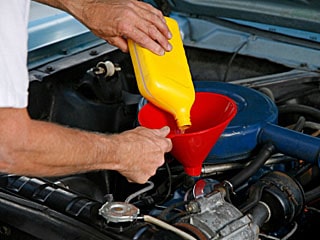
 The good thing about supplements and such is that they’re mostly harmless. Expensive, true, a waste of money in most cases to be sure, but by-and-large, they don’t cause direct harm to the horse or the horse’s joint. But from a medical point of view, a practice that I find particularly galling (and pervasive), is the so-called “maintenance” joint injection. Some horses – particularly horses that compete in various sporting disciplines – may have one or more joints injected with any number of substances, on some sort of an arbitrary schedule in an effort to “maintain” their joint health. In fact, I’ve heard it said that virtually no horse can compete without having its joints injected at some point: that’s just wrong. One rationale given for such an approach is the same one that’s used to change the oil in the engine of a car. That is, car engines have a fluid in them (oil) that lubricates the engine, and which needs to be replaced periodically. Why not joints?
SIMPLE ANSWER: Because horse joints really aren’t like car engines at all.
MORE COMPLEX ANSWERS: Read on
The horse-joints-as-car-engines is not a very good analogy. I mean, I guess you could say that both have a lubricating fluid which is necessary for their good health and performance, but that’s about where the comparison ends. Here are some very important differences.

Hard at work
1. Joints continually produce new joint fluid. Engines don’t produce new engine fluid. Which means that….
2. You change the oil in your car because the oil gets dirty and starts to breakdown. Since joint fluid is constantly being replaced with new fluid produced by the horse’s body, there’s no reason to go in there for “maintenance.” It’s not like your horse is going to run out of joint fluid, or that the joint fluid is going to get worn out or leak; new fluid is being made 24:7.
3. The fluid in engines gets replaced on a schedule determined by the manufacturer to help keep parts from wearing out, based on analysis of the oil (it gets thin and dirty). The fluid in joints gets “maintained” on a schedule determined by… well, um… based on… well, um…. scientifically indicated by, well, um…. never mind.
 4. The fluid you put in engines stays there, until it gets dirty, leaks, gets used up, and/or wears out. When you put something into a joint, it’s fairly rapidly removed. Seriously. So, for example, when you inject, say, hyaluronan into a horse’s joint, it’s removed pretty quickly by the horse’s body (like a day or two). It’s pretty hard for a substance to “maintain” anything for long when the substance isn’t even there.
5. When you put oil in an engine, there’s no risk to the engine. When you put something into a joint, you’re taking a risk. Although it’s not a very big risk, when you inject a joint, you risk complications such as infections, adverse reactions, and joint bleeding. To me, if there’s no benefit (and, when it comes to “maintaining” normal joints by injection, there’s no evidence at all that the practice is of any benefit), then there’s no reason to take any risk, even if that risk is small.
6. There’s a certain cost for both. But it costs much less to put oil in an engine than it does to put anything in a horse’s joint. Plus, as I said, you’re not risking any harm to the engine.
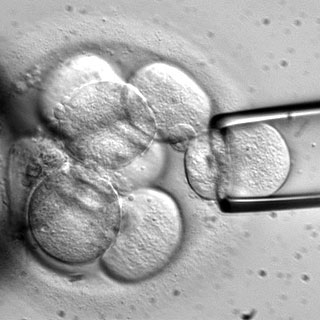
Injecting, in order…
There’s absolutely no scientific support for the idea that injecting substances into normal horse joints is somehow beneficial to their health. None. Zero. Zilch. If there were, you’d think that the practice would be commonplace in the most valuable athletes: humans. That is, if “maintenance” joint injections were necessary – or even helpful – you’d think that shooting guards, shortstops, and wide receivers would be lining up for their periodic shots in the knee (or whatever). Think about it – if you’ve got the chance to make, oh, $20 million dollars a year, you think that you’re going to forgo getting periodic joint injections if there were any evidence at all that they would help? I mean, human athletes have injected themselves with just about anything over the years (see: regularly recurring newspaper reports, or sports shows). You think that they’d mind getting a needle stuck in their joints every once in a while if they thought it would do them any good?
 Here’s the bottom line. No substance delivered through a needle (and, for that matter, no supplement) can replace sound management. For horse joints, sound management includes:
1. Making sure that your horse gets regular exercise
2. Making sure that your horse can move around as much as possible
3. Keeping your horse at a healthy body weight
4. Not overworking your horse.
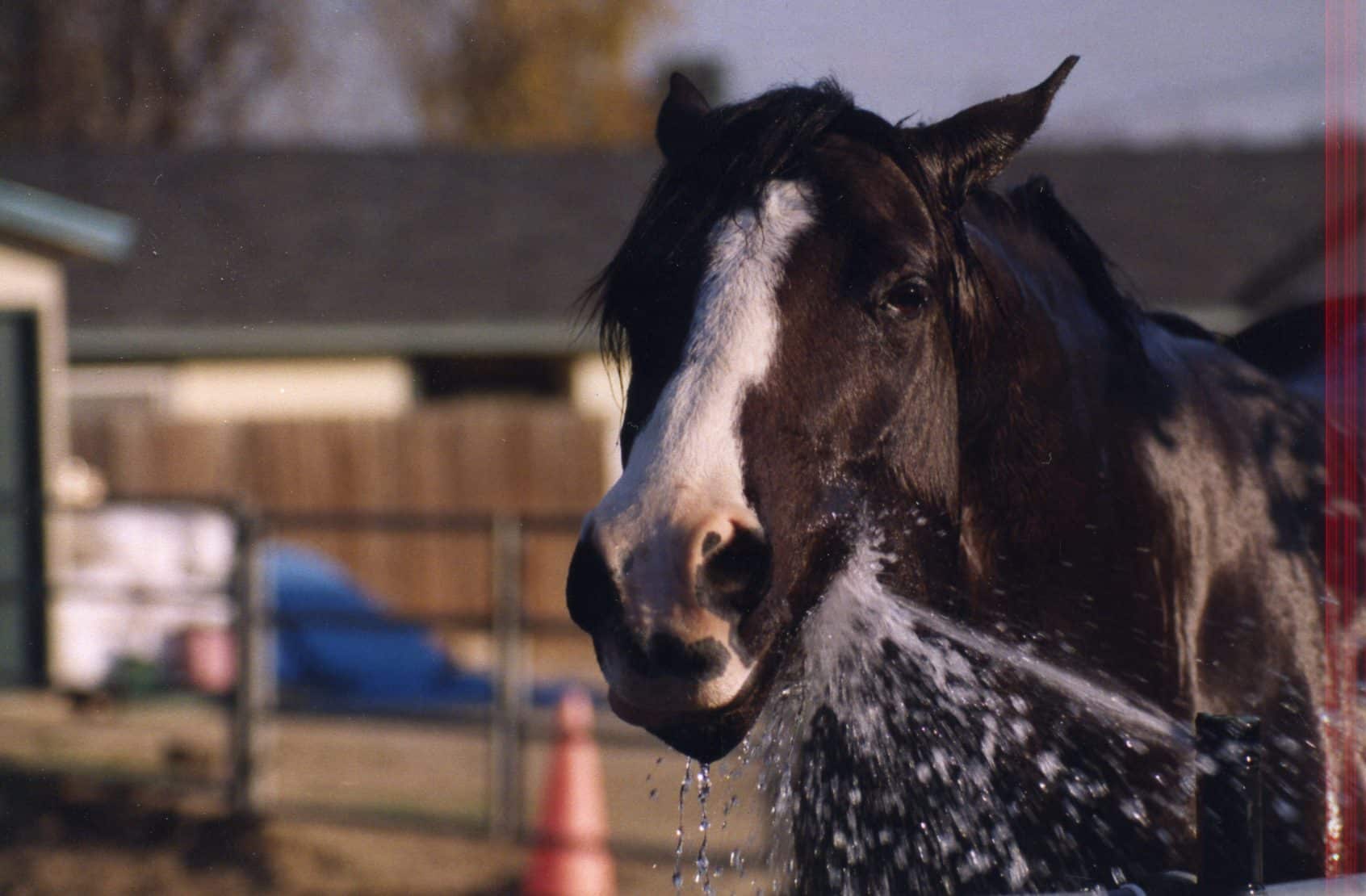
If you can’t see me, you can’t inject me
Look, I get that you care about your horse, and that you’ll do just about anything to keep him healthy. But so do folks that are telling you that you need this or that product or service to keep him so. This whole idea that healthy joints need some kind of injectable “maintenance” is just silly, and subjects your horse to a completely needless risk. It’s much better to save your money for entry fees!