
 Shakespeare, King Lear.. (Act 1, Scene 4): “Striving to better, oft we mar what’s well.”
Horse owners, understandably, have a great concern about the possibility of their horse being in pain from one problem or another. Those concerns get understandably amplified if owners perceive (or are told) that their horses might be suffering. They subjects of pain, discomfort, and suffering are really interesting – and really important – but they are a lot more nuanced than I think many people think. Thus, I thought that it might be helpful to consider those three topics, since a good bit of my clinical time has been spent helping people deal with those concerns as relate to their horses.
The first thing I think is important is to try to define what we mean when we are talking about those tree topics. Most hurts have some degree of pain associated with them, pain certainly causes some degree of discomfort, and pain can certainly lead to suffering. For myself, as well as my clients, I tend to think of the differences between pain, discomfort, and suffering like this.
www,savagechickens.com
PAIN
Pain, unlike discomfort or suffering, is a physical sensation. Simply put, pain is a sign that something is wrong. Pain can be an intense, unpleasant feeling that often signals some sort of tissue damage.
NOTE: In this article, I’m, not touching on concept of emotional pain. That’s real, too, but here we’ll keep the topic limited to physical pain.
Pain is often sharp and localized. It can indicate a problem that needs attention: a limping leg, or a horse rolling on the ground because of pain coming from his abdomen. Intense pain changes the way horses behave. Simply put, pain is a sign that something is wrong. Acute injuries, infections, or chronic conditions such as arthritis or laminitis can all cause pain. In addition, pain is often thought of as a signal from the horse’s nervous system that helps protect the horse’s body from further injury, for example, telling a horse that he shouldn’t put weight on an injured limb.
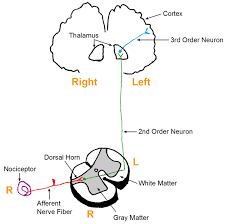
Pain pathways are complicated
Pain is a signal, but it’s not necessarily a simple one. A horse with a relatively minor problem such as a hoof abscess may be in a lot of pain, but that pain resolves quickly when the abscess is treated. On the other hand, a horse with a tendon injury may demonstrate much less pain than the horse with the abscess, but the problem is more likely to be long term, and the tissue damage more enduring.
Pain certainly has some objective elements, after all, it is a physical event. For example, we can measure chemicals in the horse’s body associated with pain, and there are specialized receptors in the horse’s nervous system that recognize a painful stimulus. Still, every individual horse’s response to pain can be different. So, for example, some horses experiencing pain from colic will throw themselves on the ground in agony from the slightest provocation, whereas other horses with the same underlying problem will just stand around and stop eating.
 More often than not, signs of physical pain are obvious. A horse has a painful joint due to arthritis; it limps. A horse has an intestinal problem in its abdomen; it paws and rolls with colic. A horse has a broken tooth: it may not want to eat. Pain is often a sign that a horse need veterinary attention. It’s usually important to stop activities that cause pain, especially if it is sharp or acute.
Still, when considering pain, and especially when considering if your horse is in pain, you have to remember that the primary goal of the horse is to stay alive. As such, horses tend to endure in the face of pain. For the horse – for all animals, really – hurting is better than being dead.
DISCOMFORT
Discomfort is more of a value judgement. Discomfort can be caused by pain, but the pain is more in the background. Discomfort is a milder, more general feeling of unease or irritation. Depending on the day, or the time of day, the horse’s discomfort may seem better or worse. With discomfort the pain is less severe and it can even be temporary, for example, the muscle discomfort from muscle fatigues that may be associated with normal exertion.
 Discomfort can be annoying and irritating (especially to horse owners). Discomfort can be also associated with subtle behavioral changes, but it doesn’t necessarily change anything about the horse’s day-to-day existence. The cause of a horse’s perceived discomfort can be a lot harder to pinpoint than the cause of obvious pain pain – and it’s certainly harder to quantify – but discomfort usually doesn’t demand immediate action.
We can often manage a horse’s discomfort. For example, if a horse has arthritis, we can often help him manage the discomfort from the associated pain by using anti-inflammatory and pain-relieving drugs (there are many). We can reduce the amount of intense exercise that he is asked to perform or we can give him room to move around freely, so that he doesn’t get too stiff. We can pad his stall or put in more bedding. We may not be able to complete get rid of the pain, but we can certainly often help him deal with the discomfort. We certainly don’t want to ignore a horse’s discomfort, but discomfort doesn’t also mean that the end is near. Furthermore, just because a horse may have some mild pain or discomfort doesn’t mean that the horse is suffering.
SUFFERING
 Just like discomfort, suffering is more of a psychological concept. Pain is not the same thing as suffering, although pain can certainly result in suffering. Suffering can occur when pain is significant, enduring, and/or threatens the horse’s existence. Furthermore, the suffering of the horse can be shared by the owner; after all, it’s the owner who calls the veterinarian, not the horse. For the owner of a horse in pain, suffering is the story the owner’s mind tells him or her about what is happening to the horse. For the horse, suffering is a result of a serious, painful problem; for the owner, the suffering is about giving interpretation and meaning to what the horse is experiencing.
Here’s an example. A horse with colic experiences pain, and, depending on the problem, that pain can be severe. The horse may not want to eat, won’t rest, and can’t escape his pain. The owner – empathizing with the horse’s pain – may suffer from concerns about the horse’s discomfort, as well as a potential or actual loss, both of the horse, and of money.
IT GETS COMPLICATED
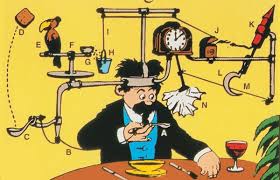 There aren’t necessarily clear lines when talking about these topics. Addressing pain, at least to the extent one can, is an important responsibility. However, horses can also live good lives with a bit of discomfort. But it’s complicated. On one hand, minimizing a horse’s pain by calling it “discomfort” can obscure the need for veterinary intervention. On the other hand, treating discomfort as some sort of a crisis that requires constant intervention can cause needless fear and anxiety (stoking owner fears and anxieties is the sort of thing that supplement companies, and some horse owners, are particularly good at).
 Plus, there’s overlap. For example, giving a horse a shot causes him some brief, pain, but that pain is quick, and quickly over. A shot doesn’t cause a horse much discomfort, and certainly doesn’t make him suffer. We do such things to horses all the time without much of a thought.
Horses can also have discomfort without pain. For example, a horse kept alone in a stall for 23 hours a day – or several days in a row – may not be in pain, but arguably has to endure a considerable amount of emotional discomfort, particularly if isolation persists. Horses need to get out and move around for a lot of reasons. But as I said at the start, that’s a different topic.
Of course, horses can’t articulate whether they are suffering, so it’s up to us to interpret their behavior. Those interpretations are, by nature, imperfect, and very individualistic, and they are frequently the subject of intense disagreements between horse owners. That’s why it’s a good idea to share you concerns about your horse’s comfort level with someone who is more likely to give you an objective opinion, e.g., your veterinarian.
What We Know For Sure
Prey animals
Horses can confidently assert that horses feel pain. That’s not controversial at all. Just like people, horses have pain receptors, spinal reflex arcs, limbic-system responses, stress hormones, and behavioral reactions that mirror the physiologic makeup of humans. However, the experience of pain is probably different between horses and humans. Horses are prey animals, and showing and being debilitated by pain makes them more likely to become prey than to get away. Thus, they usually try to mask their pain to a certain extent.
My general feeling is that a bit of discomfort for a horse does not mean that the horse can’t be useful, and lead a wonderful life. Many of us have the occasional aches and pains, but that doesn’t mean that we need to stop living. In my view, it’s better for the horse (and owner) to have a life, purpose, and companionship than it is to constantly try to achieve some sort of physiologic perfection. Or, as Voltaire said, “The perfect is the enemy of the good.” Constantly chasing some sort of unattainable perfection in a horse (or in any relationship, really) prevents people from enjoying and taking advantage of situations that are plenty good.
 Of course, chronic pain discomfort can lead to chronic pain and suffering, especially when a condition tends to get worse over time (e.g., arthritis, or laminitis). People also shouldn’t allow the conditions causing chronic pain to be becomes normalized; this can lead to ongoing suffering. In fact, human desires and equine welfare can sometimes find themselves at odds and signs of suffering can be rationalized away. It’s important to keep the quality of the horse’s life in the front of your mind.
IN SUM
Certainly, it’s important to try to mitigate a horse’s pain whenever possible. Certainly, we don’t want horses to suffer. But I do believe that there are many situations where a horse can have some discomfort and still have a meaningful and happy life, for example, an older horse with mild arthritis of the pastern. Unfortunately, it can sometimes be hard to define what any of that means. But if you’re thinking about it, my experience has been that you’re probably going to do the right thing, for both you and your horse.