 1. The number one problem that I see related to hooves is that they get cut too short. One of the very important functions of the hoof is to keep the bone that’s inside the hoof from hitting the ground. If there’s not enough hoof to protect the bone, the horse’s foot gets sore.
To measure the length of your horse’s hoof, get a measuring tape. Start at the coronary band, at the horse’s toe (the toe is at 12:00 o’clock on a clock face, with 12:00 being the toe and 6:00 being between the heels). Then measure straight down the front of the hoof to the bottom of the hoof (if your horse is wearing a shoe, don’t measure the shoe). There’s some variation based on individuals, of course, but here are some guidelines:
- A horse that weighs less than 900 pounds should probably never be shorter than 3 inches in length.
- A horse that weighs between 900 and 11 pounds should probably never be shorter than 3 ¼ inches in length.
- A horse that weighs over 11 pound should probably never be shorter than 3 ½ inches in length.
- Horses bigger than that may need to go longer. My horse, “Piper” probably weighs around 1200 pounds and if her hoof length gets less than 3 ¾ inches she gets sore.
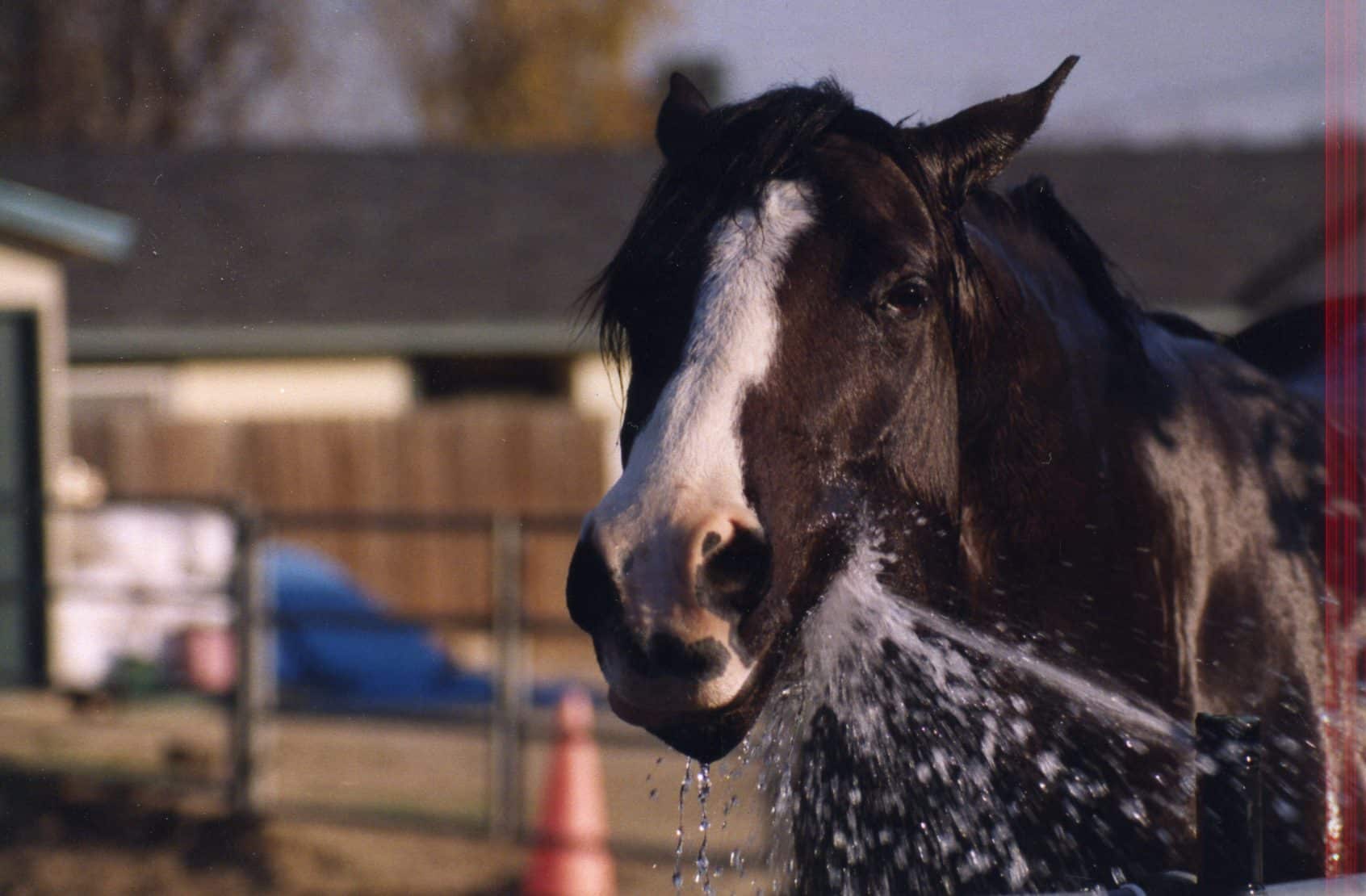
2. White hooves are just as strong as black hooves. There was even research on that question a few decades back.

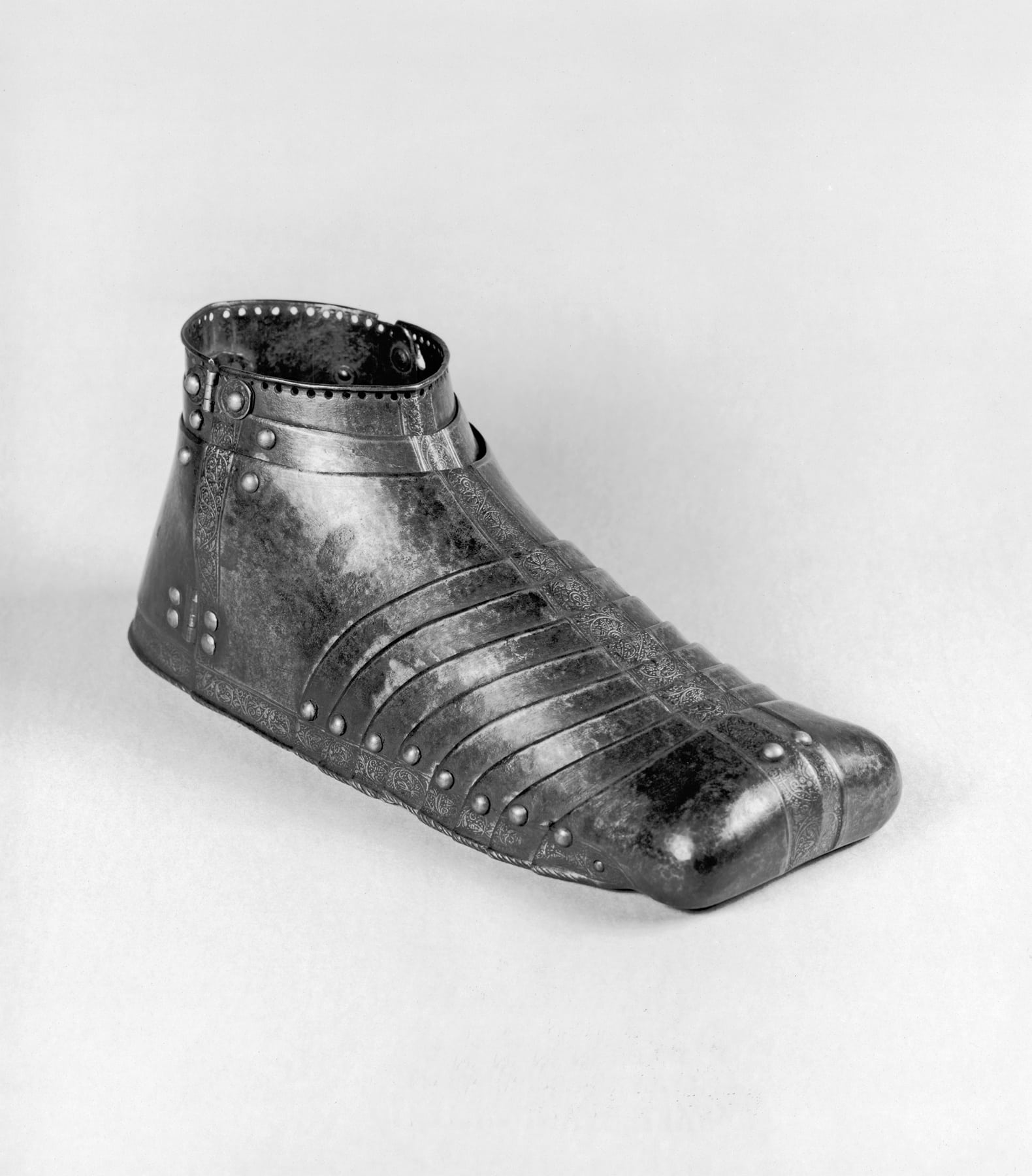
I did not know a knight’s foot armor was called a sabaton.
3. Barefoot trimming is important. In fact, if you don’t trim your horse’s foot when it’s barefoot – if you try to do it while the shoe is in place – you’ll ruin your shoeing tools and you won’t get very far.
4. The current person who shoes your horse will always be incompetent in the eyes of the next person who shoes your horse.
5. If you’re relying on anything to “draw out” something from your horse’s hoof (say, an abscess that you think might be there, but still hasn’t opened), you can soak it or wrap a in anything that you want, but none of it will magically convince whatever it is to come to the outside (of the horse). It’s a quaint concept – and quite old – but the concept is prescientific and based on hope and naïve optimism.
6. Hoof dressings may be of some limited benefit, but if they do anything, the do it because they try to help keep moisture from leaving the hoof, not because they put any moisture back in the hoof. There’s been very little research done on the subject, but a few decades back, researchers concluded that petroleum-based hoof dressings prevent moisture loss better than those with a lanolin base. As for petroleum products, I’ve known people to paint used motor oil on horses, with no obvious ill effect. Petrolatum ointment seems to work pretty well, too. Although treating hooves is not on their list, you can CLICK HERE to see 101 uses for one brand of petrolatum ointment.
 7. Don’t pay for vitamins in your horse’s hoof dressing. Hoof tissue is dead, and it can’t be resurrected with vitamins, minerals, or anything else you paint on it. Dead is dead.
8. Biotin was touted as a hoof-growth promoter about 4 decades ago, based on some rather weak research in ponies. As a result, most hoof growth supplements throw biotin into the mix. However, biotin is a B-vitamin and it’s impossible to make your horse deficient in B-vitamins, even if you feed him a diet from which all B-vitamins have been completely removed (that research was one a few decades back). Otherwise stated, don’t get your hopes up when it comes to biotin.
9. Shoeing theory is just that: Otherwise stated, there is no one way to shoe or trim every horse, and there is no one shoeing or trimming solution that works for every problem. Plus, just because it seems like something should work on your horse’s hooves doesn’t mean that it will work on your horse’s hooves.
 10. The theory behind keeping a horse barefoot makes some sense. Unfortunately, some horses don’t do well barefoot, mostly because the ground wears their foot away. And, it’s not like horses that have been barefoot all their lives don’t have problems. For example, studies on wild horses in New Zealand in the 2010’s documented all sorts of problems.
11. Raising your horse’s heel will decrease the tension in the deep flexor tendon by 23% (or something) according to one lab study on horse legs that had been removed from the rest of the horse. That does not mean that raising the heel on every horse is going to reduce tension in the deep flexor tendon, and particularly if you plan on keeping your horse’s leg attached to the rest of him.
 12. The idea that if you round the front of the toe of your horse’s hoof (“roll the toe”), your horse will find it easier to “breakover” the toe when he strides is very appealing, say, if your horse has some pastern arthritis (“ringbone”) and you’d like to try to make it easier for him to stride. Unfortunately, the amount of time that breakover actually happens in the stride is super short (less than 1% of the stride), so, even if you could affect some change, it wouldn’t be much of a change. It’s OK to try it – just don’t get your hopes up too high.
13. Raising your horse’s heels with a pad makes some sense if your horse has low heels, at least theoretically. Unfortunately, horses rarely cooperate when it comes to theory and sometimes raising the heels just beats them up (possibly by increasing the load on the  heels). It’s not wrong to try, just keep in mind that anything you can do to a horse, the horse can undo.
14. It’s important to keep your horse’s hooves cleaned out to prevent infections, look for problems (like stuff stuck in the hoof), and just for general hygiene. Hoof picks and the little brushes that they sometimes stick on the other end of them are really cute, sometimes colorful, and pretty useful, however, if you really want to clean out the bottom of your horse’s feet, go buy a steel brush: the kind you use to scrape peeling paint off a wall prior to repainting. They come in a variety of sizes, including a toothbrush-sized one to get down into the smallest cracks.
 15. Lot of different things can be applied to the bottom of hooves to try to help prevent infections. Most of them work. I’m a big fan of dilute bleach solutions (1 part bleach to 8 parts water) because they’re inexpensive, they don’t stain, they’re very effective, and they’re biodegradable.
I’m sure there are plenty of other useful tips that you may have. Please feel free to share them in the comments!